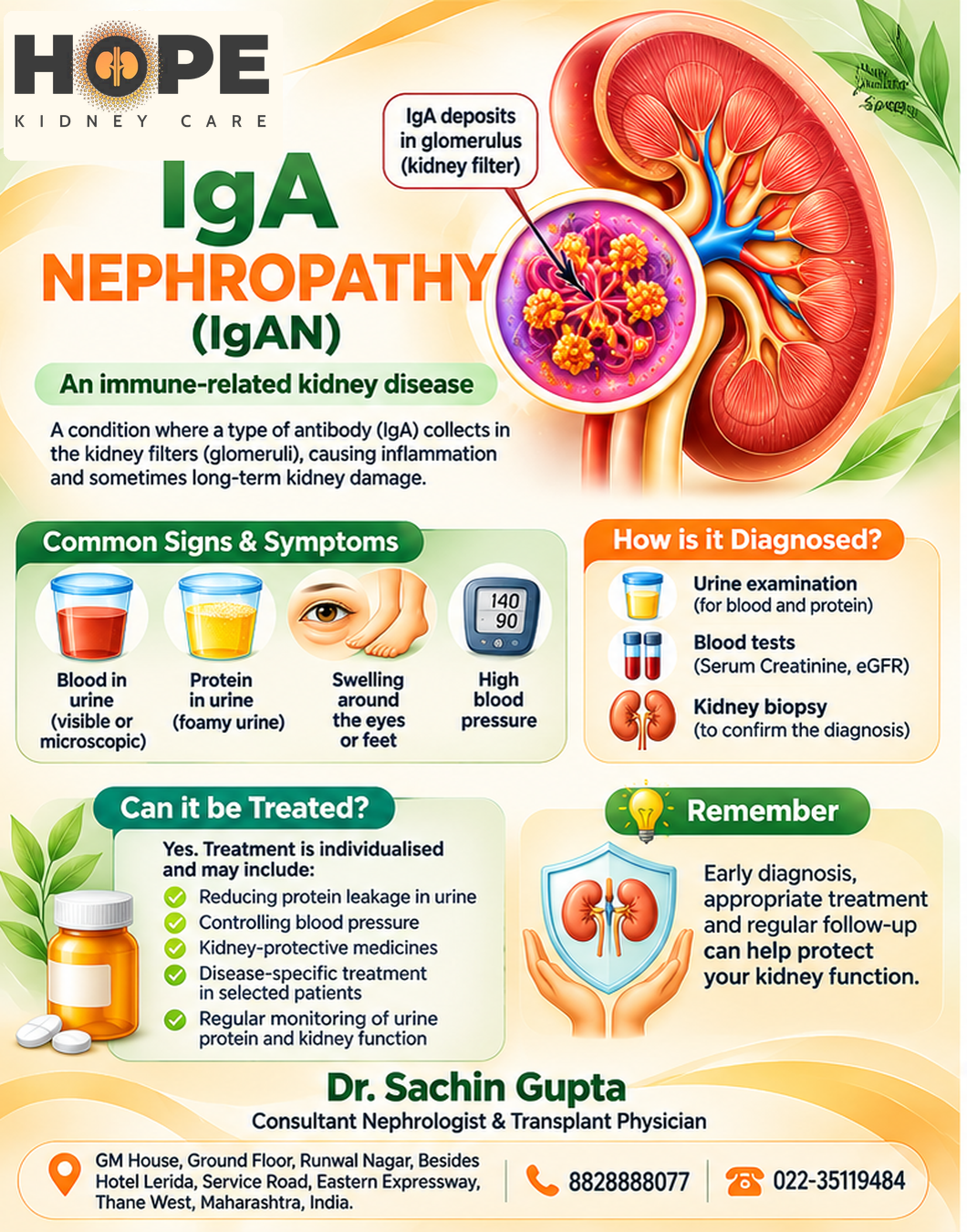
IgA NEPHROPATHY (IgAN) – A common immune-mediated kidney disease
Did you know that an antibody normally involved in protecting us against infections can also contribute to kidney inflammation?
What happens in IgA nephropathy?
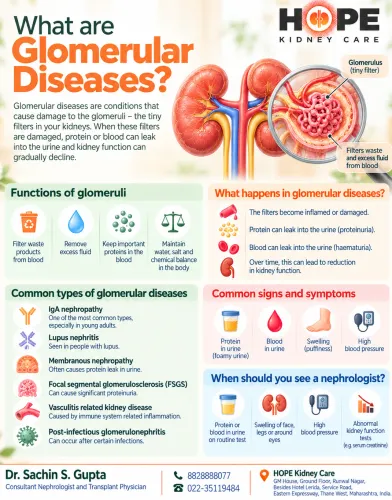
IgA-containing immune complexes accumulate in the glomeruli (the tiny kidney filters), triggering inflammation and sometimes progressive kidney damage.
Common presentations:
* Blood in urine (visible or microscopic)
* Episodes of blood in urine during or shortly after respiratory infections
* Protein in urine (foamy urine)
* Swelling of feet or around the eyes
* High blood pressure
Some patients have no obvious symptoms and are detected during routine urine testing.
How is it diagnosed?
* Urine examination for blood and protein
* Serum creatinine and eGFR
* Blood pressure assessment
* Kidney biopsy to confirm the diagnosis
Can it be treated?
Yes. Treatment is individualised according to the risk of progression and may include:
* Reducing protein leakage in urine
* Controlling blood pressure
* Kidney-protective medicines
* Disease-specific treatment in selected patients
* Regular monitoring of urine protein and kidney function
Remember: Early diagnosis, appropriate treatment and regular follow-up can help protect kidney function.
Dr. Sachin Gupta
Consultant Nephrologist & Transplant Physician
#IgANephropathy #IgA #Glomerulonephritis #KidneyHealth #KidneyDiseaseAwareness #Nephrology #PatientEducation #KidneyCare #HOPEKidneyCare
Keywords