A diagnosis of Chronic Kidney Disease in Vasant Vihar often raises immediate questions How serious is it? Will kidney function continue declining? Is dialysis inevitable?
Chronic kidney disease, commonly shortened to CKD, covers a broad range of kidney impairment. The outlook depends on the cause, stage, progression rate, related medical conditions.
Good long-term care therefore focuses on much more than a single creatinine result.
Understanding CKD Properly
CKD generally refers to abnormalities of kidney structure or function that persist over time.
Doctors commonly use eGFR to estimate filtration capacity. Urine protein measurements can provide additional information about kidney damage plus future risk.
A patient with mildly reduced filtration may require a very different care plan from someone approaching advanced kidney failure.
Look for Evaluation of the Underlying Cause
A useful kidney-care plan starts by asking why kidney function is abnormal.
Possible causes include diabetes, persistent high blood pressure, inflammatory kidney diseases, inherited conditions, urinary obstruction, other medical problems.
Identifying the cause can influence treatment plus monitoring.
Monitoring Should Focus on Trends
Kidney function is best understood over time.
A single abnormal result may be influenced by temporary factors. Repeated results help establish whether function is stable, improving, progressively declining.
Patients should keep previous laboratory reports whenever possible.
Medication Review Is Important
People with CKD often take medicines for several conditions.
A nephrologist may review medication doses because some drugs require adjustment when kidney filtration declines. Certain medicines may need caution based on kidney function.
Patients should also disclose non-prescription pain medicines, supplements, herbal products.
Stopping prescribed medication without medical advice is not recommended.
Diet Should Be Individualized
Online kidney diets can be overly restrictive.
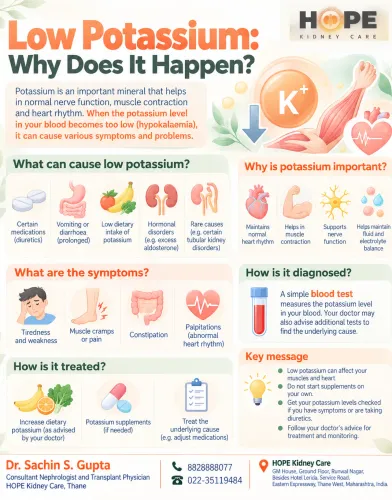
Not every person with CKD needs identical limitations on potassium, phosphorus, protein, fluids. Recommendations depend on kidney stage, laboratory findings, nutritional status, medications, other health conditions.
Individualized guidance helps avoid unnecessary restrictions.
Ask About Complication Monitoring
Advanced CKD can influence several body systems.
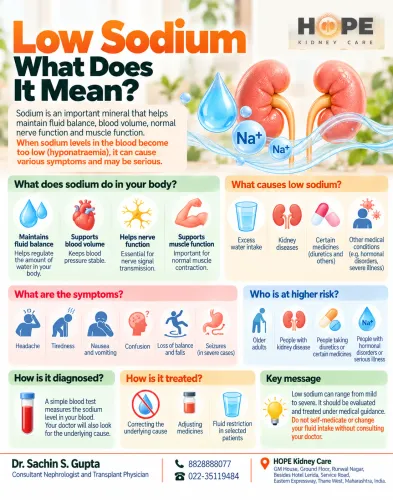
Depending on disease stage, clinicians may monitor for anemia, mineral-bone abnormalities, electrolyte disturbances, acid-base changes, fluid retention.
The required frequency of testing varies.
Planning Matters in Advanced Disease
When kidney function becomes severely reduced, patients may benefit from early discussions about future renal replacement options.
This does not mean dialysis will start immediately. Advance planning provides time to understand available choices plus prepare appropriately if kidney function continues to decline.
Hope Kidney Care offers nephrology evaluation for patients in Vasant Vihar who need structured long-term monitoring of chronic kidney disease.
A useful kidney-care relationship should help patients understand their current stage, likely cause, treatment goals, monitoring schedule, warning signs.
CKD management is not based on promises to reverse every form of kidney damage. The realistic goals are to identify treatable factors, reduce avoidable kidney stress, manage complications, monitor progression, prepare appropriately when advanced treatment becomes necessary.
Keywords